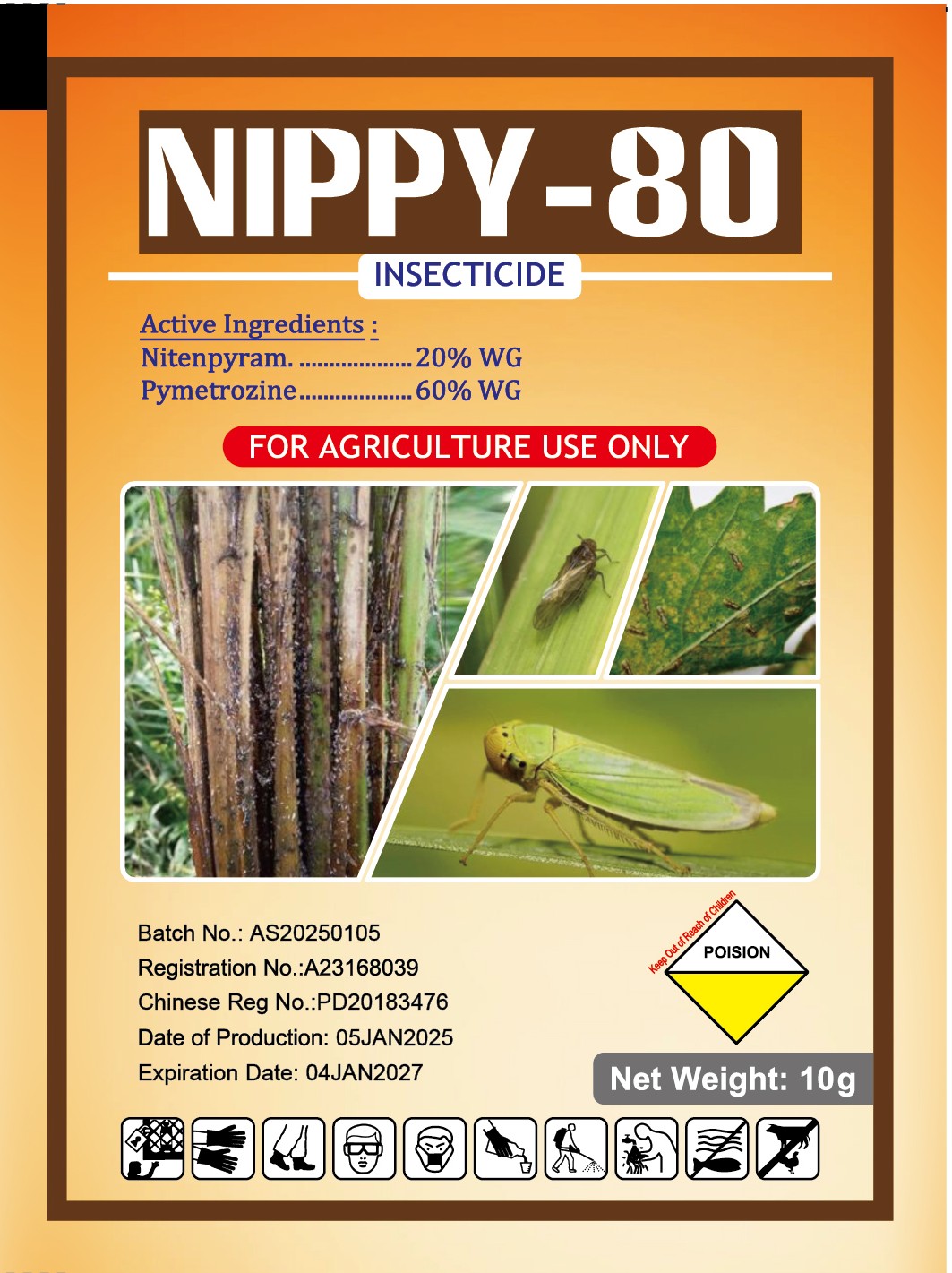
Nippy (Nitenpyram 20% + Pymetrozine 60% WG) – Insecticide for Nepal Farmers
निप्पी (नाइटेनपाइराम २०% + पाइमेट्रोजिन ६०% WG) – नेपाली किसानका लागि कीटनाशक
Featured snippet answer: Nippy is a insecticide based on Nitenpyram 20% + Pymetrozine 60% WG, used to help manage pest pressure such as aphids in Nepali crops when applied according to label guidance and local recommendations.
Quick Product Summary
A fast-plus-long-lasting combination insecticide for sap-sucking pest pressure in vegetables and field crops. In Nepal's vegetable and field cropping systems, pest pressure can build up quickly with changing weather, and a dependable insecticide option supports farmers who need timely, practical protection.
What Is Nippy?
Nippy is formulated with Nitenpyram 20% + Pymetrozine 60% WG, supplied as a Water Dispersible Granule (WG). It is used as part of an integrated pest-management plan for crops facing aphids and related challenges. Its use should always follow the approved product label and local agricultural guidance.
Active Ingredient & How It Works
Nitenpyram gives quick knockdown of feeding pests while Pymetrozine stops feeding behaviour for an extended period, together delivering fast action and lasting protection. Good spray coverage and correct timing are essential — the product is most effective when applied before pest pressure becomes severe.
Key Features
- Useful for pest management in a timely spray program
- Fits into integrated crop protection alongside monitoring and field hygiene
- Practical Water Dispersible Granule formulation for standard sprayers
Pests Controlled
- Aphids
- Whitefly
- Jassids
- Other sap-sucking pests
Recommended Crops
- Vegetables
- Cotton
- Field crops
Selection should always be based on the target pest, crop stage, and the approved label for that crop.
Best Time to Apply
Apply when pest pressure is rising or at the first sign of aphids. Early, well-timed application generally gives better protection than waiting until the problem is well established. Field scouting and local weather conditions should guide the decision.
Application & Mixing Guidelines
Always follow the approved product label and local agricultural recommendations for dosage and interval. Mix in clean water, agitate thoroughly, and use a calibrated knapsack or boom sprayer for uniform canopy coverage. Avoid spraying during strong wind or before rain, as this reduces effectiveness and increases drift.
Resistance Management
Rotate products with a different mode of action rather than relying on one insecticide repeatedly, and combine spraying with field monitoring to reduce the risk of resistance building up in the pest population.
Safety Precautions
Wear protective gloves, mask, and eye protection during mixing and spraying. Keep the product away from children, food, and animals, and avoid contact with skin or inhalation of spray mist. Always follow the safety statements printed on the label.
Storage Instructions
Store in a cool, dry, well-ventilated place away from direct sunlight and moisture. Keep the container sealed and clearly labeled, and store separately from food and animal feed.
Why Choose Panchkhal Beej Bhandar and Agro Center?
Panchkhal Beej Bhandar and Agro Center supports Nepali farmers with practical, field-tested crop protection products and technical guidance suited to real growing conditions across Terai and mid-hill regions. Nippy is a useful addition to a well-planned pest-management program.
Frequently Asked Questions
- What is Nippy used for? It is used to help manage pest pressure such as aphids in crops grown across Nepal.
- What is the active ingredient? The active ingredient is Nitenpyram 20% + Pymetrozine 60% WG.
- When should it be applied? Apply early, before pest pressure becomes severe, and always follow the approved label and local recommendations.
- Is it safe to use with proper precautions? Yes, when protective equipment, correct dosage, and label instructions are followed carefully.
Conclusion
Nippy gives Nepali farmers a practical insecticide option for managing pest pressure in the field. Used with correct timing, proper safety measures, and label guidance, it can support healthier crops and more reliable harvests.